
What Makes a Renovation Project Financeable?
While important, the purchase price is the least interesting number in a renovation deal.
It tells you what someone invested as the starting point, but says nothing about whether the project can actually be funded, executed, and exited. Lenders who underwrite on purchase price alone miss the real question: does this deal hold together when something goes sideways? Borrowers who pitch on purchase price alone leave the most important arguments unmade.
Here's what actually determines whether a renovation project is financeable, and what separates the deals that close from the ones that don't.
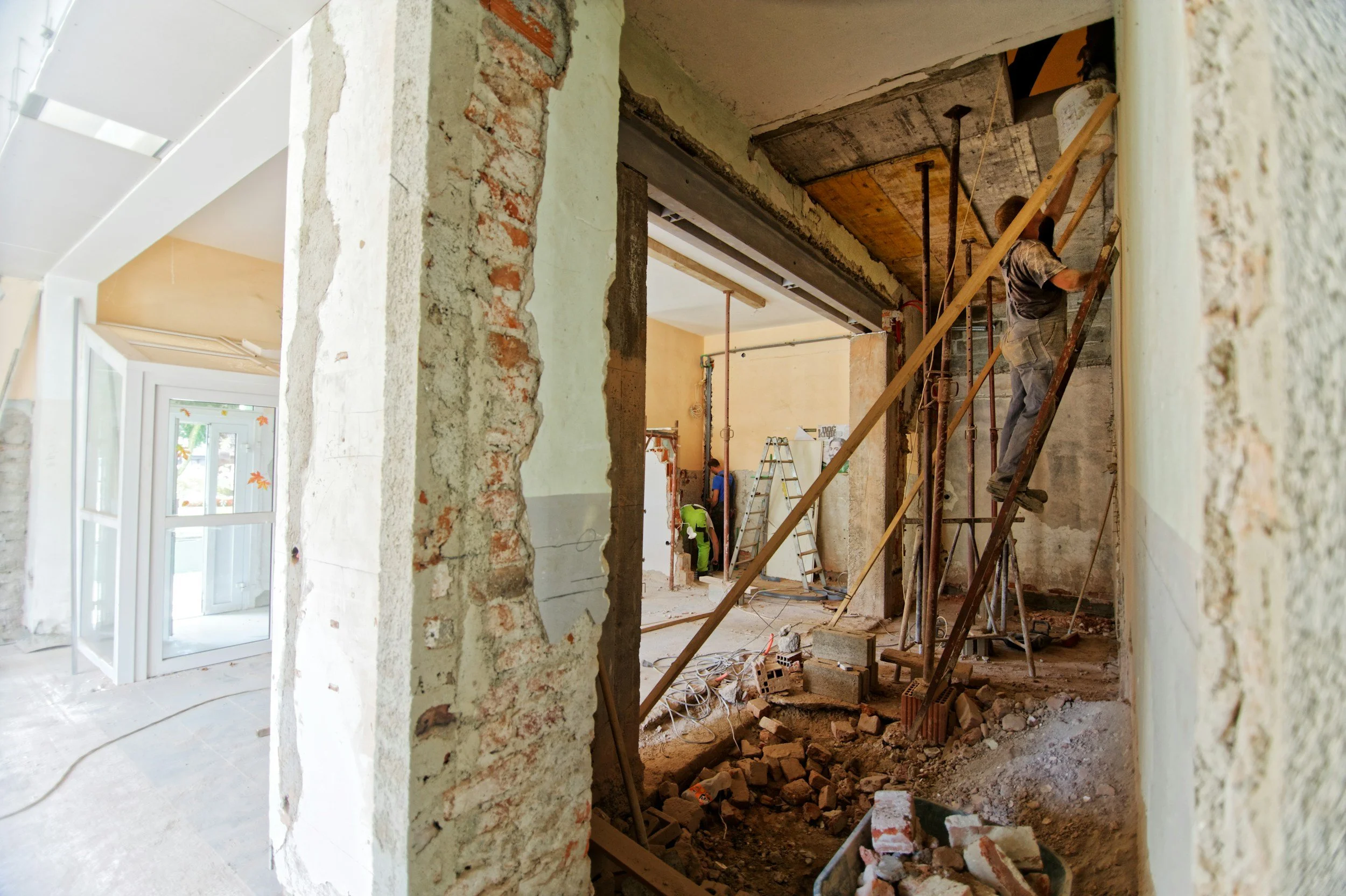
The project needs a clear path to income
A renovation project is financeable because it has a specific, defensible answer to one question: what does this asset produce when the work is done? For a value-add multifamily, that means stabilized rent rolls at market rates. For an industrial repositioning, it means a leased facility generating income that supports long-term debt. For a construction project, it means a completed unit that adds appraised value. And the income thesis has to be grounded in the market, not just a calculation. After-repair value means nothing if it's built on practical projections. Comparable sales and current tax assessments anchor the ARV to a figure a lender can independently verify. On a recent deal we funded in Mequon—a multi-building commercial property that includes a log cabin, a half-timber house, and a threshing barn being converted into 12 rental units—the targeted ARV was supported by comparable sales and a tax assessment already exceeding the purchase price. The equity cushion was real before we wrote the check.
Partial income at close changes the risk profile
One of the strongest signals in a renovation deal is income that already exists at closing. A fully vacant property requires the borrower to execute everything before the asset produces a dollar. A partially occupied property generates cash while the renovation is in progress. That's a materially different risk profile for both the lender and the borrower. On the Mequon deal, seven units were rent-ready at closing. The borrower didn't need to stabilize the entire asset to start servicing the loan. That partial income reduced the execution risk on both sides of the table. Conventional lenders typically require 85–90% occupancy before they'll finance a multifamily property. That threshold exists because they need the income to be there before they lend. Private capital approaches it differently: the question is whether the income trajectory is credible, not whether the stabilization is complete.
The renovation scope has to be realistic and verified
Scope creep kills deals. A $100,000 renovation budget that grows to $175,000 mid-project doesn't just hurt margins; it can leave a borrower unable to obtain long-term financing. A financeable renovation project has a defined scope with a budget that reflects actual contractor bids, not back-of-envelope estimates. The renovation funds should be structured so the lender can verify completion before releasing capital. Holdback structures—in which renovation funds are released upon verified completion of the work—exist precisely to protect both parties from scope drift. For industrial repositioning or complex commercial conversions, the scope question includes stabilization timeline. A lender who doesn't understand that light repositioning on a 40,000-square-foot facility takes longer than a residential rehab will underwrite the wrong loan term. The deal needs a lender who understands what's being built.
The borrower's track record is underwriting evidence
Execution risk is a weighty consideration for obtaining financing. To lenders, a well-structured deal with the wrong operator is still a bad loan. Borrower track record matters because it's the clearest evidence available that the renovation will actually happen. An experienced operator who has completed similar projects, managed contractor relationships, and executed a refinance at the end has demonstrated something a business plan can't: they can do the work. It doesn't mean an inexperienced borrower can't obtain financing, but the rest of the deal must provide stronger evidence that the project can be executed successfully. The Mequon borrower team came to us fresh off completing a nine-unit mixed-use renovation and refinance in West Allis. That prior execution was evidence that the current project's plan, though creative, was credible. For lenders evaluating a first-time borrower, the question shifts to: what does the team around this borrower look like? In addition to a data-backed financial plan, a strong, track-record general contractor, a property manager already in place, and advisors who've navigated the asset class before can partially offset the borrower's shorter history.
What does an achievable exit look like?
Every renovation project financed with bridge capital eventually needs to be refinanced or sold. The exit is not a detail; it's the entire point of the structure. A financeable deal has an exit that follows logically from the stabilization plan. A stabilized multi-unit commercial property with established monthly income is a refinanceable asset. A leased industrial building in a market with near-zero vacancy refinances under a conventional commercial loan or is sold to an institutional buyer. A flip or new construction sells at a higher appraised value. The borrower who can articulate the exit plan at the time of origination is demonstrating that the deal was designed, not improvised. That distinction matters especially for bridge capital. Exit credibility comes from the same sources as income credibility: market comparables, current occupancy trends, and a stabilization timeline that matches the loan term. If the plan is to refinance into a conventional loan, the borrower needs to understand that the lender will require occupancy thresholds, debt service coverage, and an appraisal methodology. The borrower must structure the renovation plan to meet those standards.
Will the deal hold together under pressure?
Financeability isn't just a checklist. It's a stress test. A deal that works only when everything goes according to plan isn't a strong deal. The projects that close and perform through the loan term are the ones where the income thesis survives a delayed unit, the scope holds up under contractor pressure, and the exit remains achievable even if stabilization takes longer than projected. For borrowers, that means building margin into the budget, choosing an experienced operator team, and knowing the exit requirements before the loan is written. For lenders, it means underwriting the realistic trajectory, not just the snapshot. The purchase price is where the conversation starts. The income, scope, borrower track record, and exit are where it ends, and where real financiability shows.
————————————————————————-
Legal Disclaimer:
This article is provided for informational and educational purposes only and is not intended to constitute legal advice. Real estate regulations can be complex and situation-specific. Readers should consult with qualified legal counsel or a licensed attorney for guidance regarding their particular transaction or compliance obligations.
At MGM Private Capital, we actively support real estate investors across Southeastern Wisconsin with trusted capital options and offer opportunities for capital partners to grow alongside us.